EB-5: Track Your Case Milestones
To countless global investors, the United States stands as a land of immense opportunity, a place to build a future, and a stable environment for their families. Yet, the path to permanent residency frequently resembles traversing a complicated labyrinth. This is where the EB-5 Immigrant Investor Program steps in, acting as a dependable pathway for those looking to make a meaningful investment in the U.S. economy in exchange for the coveted copyright. If you are an investor exploring your options for U.S. immigration, this detailed guide is designed to address your concerns and light the way forward. We will delve into the specifics of the program, from the starting investment to the concluding phases of securing permanent residency, using the framework provided by U.S. Citizenship and Immigration Services (USCIS) to provide you with the most precise and dependable information at your fingertips.
Important Highlights
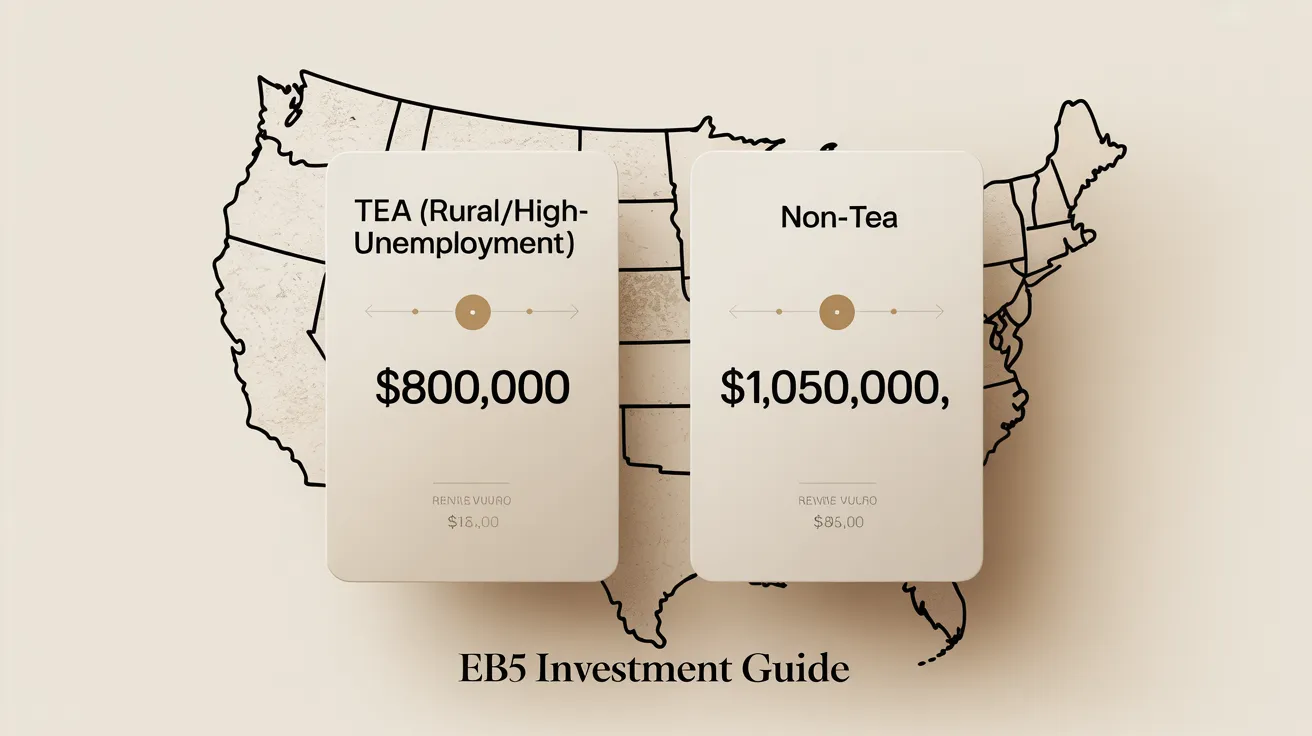
- The EB-5 investment program delivers a secure path to obtaining a U.S. copyright through investment, requiring an investment of $800,000 in a Targeted Employment Area (TEA) or $1,050,000 elsewhere.
- The procedure requires completing Form I-526/I-526E, getting a two-year Conditional copyright, and subsequently submitting Form I-829 to remove conditions.
- Investors can choose between a passive investment through a Regional Center or a active personal investment method.
- Detailed proof of the lawful source of funds plays a crucial role in determining the success of your petition.
- Visa seekers from high-volume regions might experience processing delays and must keep an eye on the Visa Bulletin for movement in priority dates.
- The initiative provides copyright status for program participants and their immediate family, with a potential pathway to U.S. citizenship after five years.
The Complete Guide to the EB-5 copyright by Investment
This EB-5 copyright by investment represents more than a simple visa; it serves as an entryway to a new beginning in the United States. Administered by USCIS, this program was designed to energize the U.S. economy through capital investment and job creation by foreign investors. In exchange for their contribution, investors, along with their spouses and unmarried children under 21, can secure a copyright, granting them the freedom to work, live, and study anywhere in the country. This pathway is one of the most reliable routes to permanent residency, as it eliminates the need for sponsorship from an employer or a family member, delivering a degree of autonomy that is highly attractive to international investors and entrepreneurs.
The EB-5 program stands as a testament to America's commitment to economic growth through foreign investment. Different from other immigration routes that require employer sponsorship or family ties, the EB-5 route allows investors to direct their immigration future through strategic investment placement. This self-directed approach resonates with successful business professionals and entrepreneurs who choose to depend on their own financial resources rather than outside sponsorship.
Breaking Down the EB-5 Investment Threshold
At the core of the EB-5 program resides the investment itself. The mandatory capital contribution isn't necessarily a one-size-fits-all amount; it varies based on the location of the business venture where you place your capital. Grasping these financial requirements represents the primary and essential phase in your EB-5 process. USCIS has implemented two different investment amounts that represent the economic development priorities of the United States federal government.
Examining the Dual Thresholds: $800,000 vs. $1,050,000
Investors need to contribute at least $800,000 if the investment is made in ventures situated in a Targeted Employment Area (TEA). In contrast, the required investment increases to $1,050,000 for projects not within these designated areas. The investment thresholds are purposeful; they are specifically designed to guide capital into high-priority locations, and the difference is significant enough to make the project location a crucial strategic element.
The investment criteria were determined with careful consideration to direct foreign capital toward economically disadvantaged regions. The $250,000 variance between TEA and non-TEA investments represents a substantial incentive that can influence project selection and general investment approach. Investors need to thoroughly assess not only the monetary aspects but also the sustained feasibility and workforce development opportunities of projects in various locations.
Strategic Positioning: Understanding Targeted Employment Areas (TEA)
A key element of a Targeted Employment Area (TEA) is a cornerstone of the EB-5 program. The program recognizes a TEA as either a rural area or a region experiencing high unemployment, namely areas with unemployment rates of at least 150% of the national average. The reduced investment threshold of $800,000 for projects within TEAs acts as a strong inducement designed to guide foreign capital into communities that will benefit most from economic development and job creation.
When investors consider a TEA-based project, it goes beyond reducing the initial investment requirement; these projects can additionally offer advantages like expedited processing and robust prospects for satisfying the program's stringent job-creation criteria. Choosing a project within a TEA can thus become a crucial factor that influences the entire journey of your EB-5 visa copyright submission. Because TEA designations are regularly reviewed and continuously revised, it is essential for investors to validate current standing prior to committing to any project.
Launching Your American Dream: The I-526/I-526E Form Process
Following the identification of your investment project, the formal procedure for obtaining your EB-5 visa starts with filing Form I-526E for Regional Center investments, or Form I-526. This petition to USCIS has to clearly establish that your investment fulfills all necessary qualifications. This involves not only providing the required capital amount but also providing a comprehensive strategy outlining how the investment will establish 10 or more full-time employment opportunities for American workers.
The I-526/I-526E application serves as the cornerstone of your full EB-5 petition. All future stages in the process depends on the thoroughness and quality of this initial filing. The petition must showcase a convincing business case that establishes not only conformity to program requirements but also the feasibility and longevity of the projected job creation. USCIS adjudicators scrutinize these submissions with considerable attention to detail, making thorough preparation critically important.
Source of Funds Verification: Establishing Your Legitimacy
A crucial part of the I-526/I-526E petition is the documentation of the legal origin of your investment funds. USCIS puts considerable importance on this part of the application, and you are required to submit a comprehensive and clear documentation of the origin of your capital. This involves submitting thorough financial documentation, namely bank statements, tax returns, and proof of property sales or other transactions, to build a clear and continuous chain of proof that your funds were sourced through proper means.
The thoroughness of your source of funds documentation greatly influences your petition's success. USCIS mandates comprehensive documentation of funds from the initial source through all transfers leading to the EB-5 investment. This documentation must account for monetary exchanges, intermediate transfers, and any borrowed or gifted funds used in building the investment amount. The intricacy of this process typically requires working with experienced professionals who comprehend the detailed documentation criteria demanded by USCIS.
The Investment Journey: Choosing Between Regional Center vs Direct Investment Options
The EB-5 immigrant investor program offers two unique options for investors: investing through a USCIS-approved Regional Center or establishing a direct investment into a new commercial enterprise. Selecting between these options will depend on your personal goals, how involved you want to be, and your comfort with risk. Each pathway comes with unique benefits and considerations that should be thoroughly assessed in relation to your individual circumstances and aims.
A Regional Center serves as an economic organization, whether public or private, that focuses on promoting economic growth. Regional Centers are widely favored since they facilitate a less active investment strategy, pooling funds from various investors and administering ventures for their benefit. They also feature more adaptable job creation calculations, allowing the inclusion of secondary and induced job creation in addition to direct employment. This comprehensive job creation framework can help investors achieve the program's employment requirements.
Direct investing, on the other hand, demands a greater level of involvement, wherein the investor is actively involved in the management of the business. This method offers greater control but also demands a greater degree of operational responsibility. Direct investments have to prove job creation through direct hiring practices, which can be more challenging but also more transparent and verifiable. The choice between these pathways should align with your investment philosophy, capacity for engagement, and comfort level with different types of business risk.
The Two-Year Conditional copyright: What to Expect
Upon approval of your Form I-526/I-526E petition and as soon as a visa opens up according to the Visa Bulletin, you and your eligible family members will be issued a Conditional copyright, which is valid for a duration of two years. This marks a significant milestone, allowing you to establish residence in the U.S. and begin your new life. However, as the name suggests, this status is conditional and comes with specific requirements that have to be completed to keep your legal status.
Over this two-year duration, your investment capital must stay fully invested and at risk in the project, and the project must proceed towards meeting the job creation specifications. This phase functions as a testing period, where you must show your continued commitment to the conditions of the EB-5 program. The conditional nature of this standing means that failure to meet program criteria can result in the loss of your copyright and probable removal from the United States.
Being a conditional resident offers many of the same privileges of permanent residency, such as the opportunity to access, work with, and use certain government services. Nevertheless, the conditional status establishes ongoing compliance obligations that demand careful monitoring and documentation. Investors need to keep thorough records of their investment's performance, employment generation status, and compliance with residency conditions throughout the conditional period.
Form I-829: Your Gateway to Permanent Immigration Status
To transition from a conditional resident to an unconditional copyright, you must file Form I-829, the petition for removing conditional status. This form must be filed within the 90-day period before the two-year mark of your entry to the U.S. as a conditional resident. The I-829 petition serves as the final step in demonstrating that you have fulfilled all the conditions of the EB-5 program.
You must demonstrate that your investment was maintained throughout the two-year provisional term and that the mandatory 10 full-time jobs for U.S. workers were generated or sustained as a result of your investment. Following the approval of your I-829 petition, the conditional requirements on your copyright will be lifted, and you will be given full permanent residency. This indicates the final stage of your EB-5 journey and the attainment of your aim of obtaining permanent U.S. residency through investment.
The I-829 petition demands comprehensive documentation proving conformity to every program requirement in the conditional phase. This includes financial records verifying maintained investment, employment records validating employment creation, and documentation of the investor's continued involvement in the venture. The quality and completeness of this evidence directly affects the probability of petition success and the favorable lifting of temporary status.
Patience is a Virtue: Understanding Backlogs, the Visa Bulletin, and Your Priority Date
For individuals from countries with high demand for EB-5 visas, such as China, India, and Vietnam, the journey to acquiring an investment copyright USA can involve a significant waiting period. This is because of the annual per-country visa quotas determined by the U.S. Congress, which limit the quantity of visas that can be issued to nationals of any single country at 7% of the total annual allocation for each visa category.
When you lodge your I-526 petition, you are given a "Priority Date," which fundamentally marks your spot in the line. The Visa Bulletin, released every month by the U.S. Department of State, offers updates on visa allocation and tracks the advancement of priority dates for individual jurisdiction. You should watch the Visa Bulletin to observe the progress of priority dates and to know when a visa becomes accessible for your case.
As the old saying goes, "patience is a virtue," and this is particularly relevant for EB-5 investors from oversubscribed countries. It is essential to consider these potential waiting times into your future strategy and to recognize that the immigration process may take several years from beginning to end. An experienced EB-5 visa attorney can offer essential assistance in navigating these complexities and developing strategies to navigate the waiting period efficiently.
Discovering New Possibilities: Exploring the Benefits and Advantages of the EB-5 Program
Even with the thorough criteria and potential waiting periods, the EB-5 program delivers numerous advantages that make it a preferred immigration option. The main benefit is the possibility for the investor, their spouse, and their unmarried children under 21 to gain permanent residency in the United States. This enables abundant options, including the authorization to live, work, and pursue education across across the nation without the need for a sponsor.
The EB-5 visa provides unparalleled versatility in contrast with other immigration routes. Different from employment-based visas that bind you to a specific workplace or area, the EB-5 copyright provides complete geographic and professional mobility. You have the ability to start a business, transition careers, or continue your studies without immigration limitations. This freedom is particularly important for entrepreneurs and business professionals who prioritize freedom and adaptability in their EB-5 visa attorney career choices.
Additionally, after keeping permanent residency for five years, EB-5 investors and their families may be eligible to apply for U.S. citizenship, finalizing their transition from investor to American citizen. The route to citizenship through EB-5 is straightforward, requiring only the maintenance of copyright status and fulfillment of standard naturalization requirements. This symbolizes the crowning accomplishment of the American dream for many international investors and their families.
Popular Questions
What you need to know about the EB-5 copyright process?
The EB-5 copyright process is a multi-step journey for international investors to acquire lawful copyright in the United States. The process starts with selecting a qualifying EB-5 project, via direct investment or Regional Center sponsorship. The applicant then submits I-526 or I-526E paperwork with USCIS, providing detailed documentation of their investment and the legal source of their capital. Following petition approval and when visas become available, the applicant and qualifying family members obtain a Conditional copyright valid for two years. Throughout this period, the capital investment must remain at risk and produce at least 10 U.S. jobs. Ultimately, investors submit Form I-829 to remove the conditions on their copyright and become a lawful copyright.
What's the minimum investment required for EB-5?
The required investment amount for the EB-5 program is set at $800,000 for investments located in a Targeted Employment Area (TEA). A TEA consists of either a high-unemployment region or rural territory. For developments beyond a TEA, the required investment amount is $1,050,000. USCIS establishes these investment levels and are a critical factor in an investor's decision-making process. The investment must be sustained at risk throughout the conditional residency period and must be sourced from lawful means with complete documentation.
What exactly is a Targeted Employment Area?
A Targeted Employment Area (TEA) is a geographic location designated by USCIS that meets the criteria of either a rural region or an area with unemployment rates reaching at least 150% of the national average. The main objective of this designation is to stimulate investment in regions of the country that need it most. Funding a TEA-based project enables an EB-5 investor to qualify for the lower investment requirement of $800,000. TEA designations are established on specific economic and geographic factors and are modified periodically to incorporate shifting economic conditions.
What are the key differences between Regional Center and direct investments?
An EB-5 investor can choose between two investment models: a Regional Center or a direct investment. A Regional Center is a USCIS-approved entity that manages investment projects and aggregates investments from multiple applicants. This investment path provides a more passive approach, as the Regional Center manages the day-to-day management and job creation requirements. Regional Centers may calculate indirect and induced jobs toward the employment requirement. A direct investment is a more hands-on approach where the investor personally manages the company administration. This option offers more control but also requires more operational responsibility from the investor and must solely rely on direct jobs toward the employment requirement.
What's a Conditional copyright?
A Conditional copyright is a temporary, provisional copyright issued to EB-5 investors when their I-526 petition is approved and visa numbers become available. It enables the investor and qualifying family members to work and maintain residence in the U.S. Nevertheless, the status is temporary subject to the investor satisfying all EB-5 program requirements, including sustaining their investment and establishing the necessary number of jobs. To obtain permanent status, the investor must submit Form I-829 prior to the end of the two-year term. Missing the filing deadline or fulfill program requirements may lead to loss of status and expulsion from the United States.